OpenAI Codex Micro - A Macropad for Directing Your AI Coding Agent by Hand
In an age where we hand our code over to AI, a physical device has finally arrived to "pilot" that very AI. The Codex Micro is OpenAI's collaboration with keyboard specialist brand Work Louder. The idea: instead of running, approving, and undoing your AI coding agent (Codex) with clicks on a screen, you do it with physical keys under your fingertips. As someone who hands off work to AI agents every day, I was curious whether this is a genuinely useful tool or just a pretty toy. It's a limited edition, so I'm still on the fence about buying one.
📊 Quick Info
| Item | Details |
|---|---|
| Brand | OpenAI × Work Louder (Supply Co. collaboration) |
| Price | About $230 (per reports, limited production) |
| Form factor | Macropad (based on the Work Louder Creator Micro 2) |
| Layout | Illuminated Agent keys · Command keys · Joystick · Dial · Mic/terminal key |
| Integration | Customized and controlled via the ChatGPT desktop app (per reports) |
| Purpose | Managing and operating the Codex AI coding agent |
| One-line take | ⭐⭐⭐⭐☆ "The concept is fresh, but practicality is a question mark" |
✨ Three-Line Summary
- 👍 Best feature: A never-before-seen collaboration piece of hardware that lets you operate an AI agent with physical keys and a dial
- 👎 Drawback: Strongly a $230 limited-edition novelty item, and its actual productivity gains are unproven
- 🎯 Recommended for: Developers who run Codex/AI agents every day, and collectors of OpenAI collaboration gear
📸 Product Tour
Shown in an actual desk setup. In a dark room, the Agent key glows blue to signal progress, with code visible on the monitor beside it
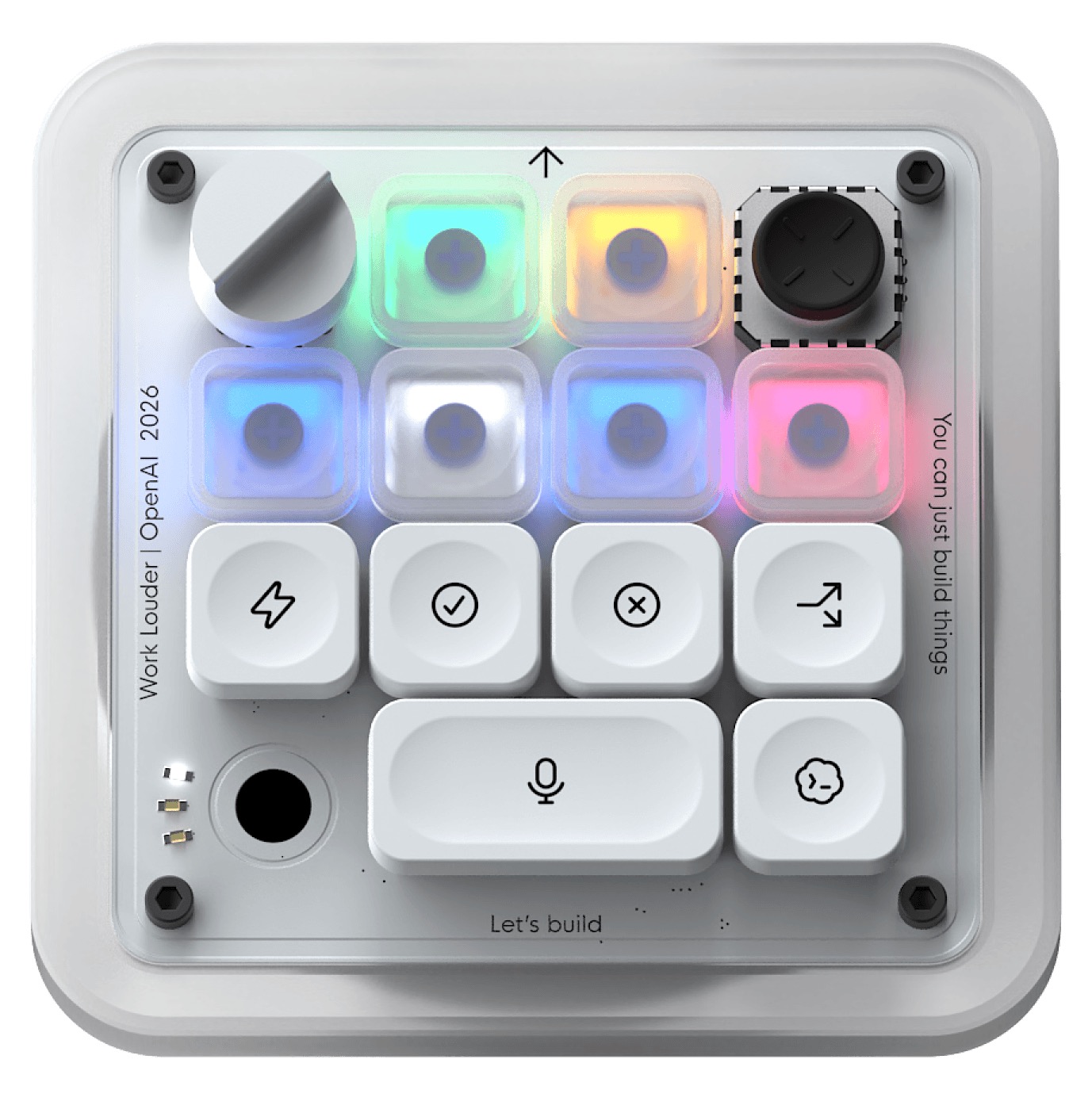
The full layout from above — RGB Agent keys up top, the dial on the upper left, the joystick on the upper right, and command keys below. The "Work Louder | OpenAI 2026" engraving marks it as a collaboration piece
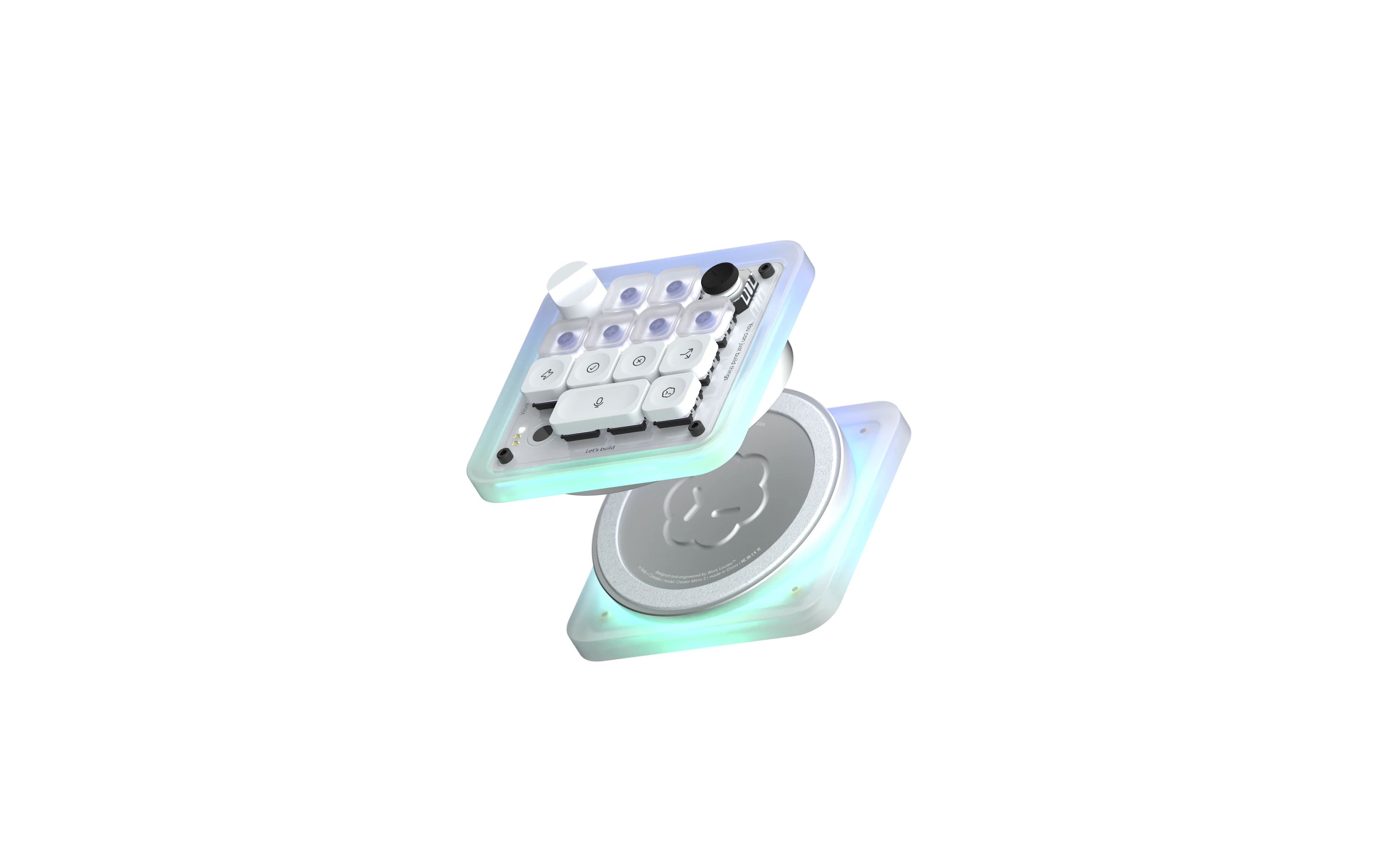
Lifting off the top plate reveals an aluminum base engraved with the OpenAI logo — the structure is built on top of the Work Louder Creator Micro 2
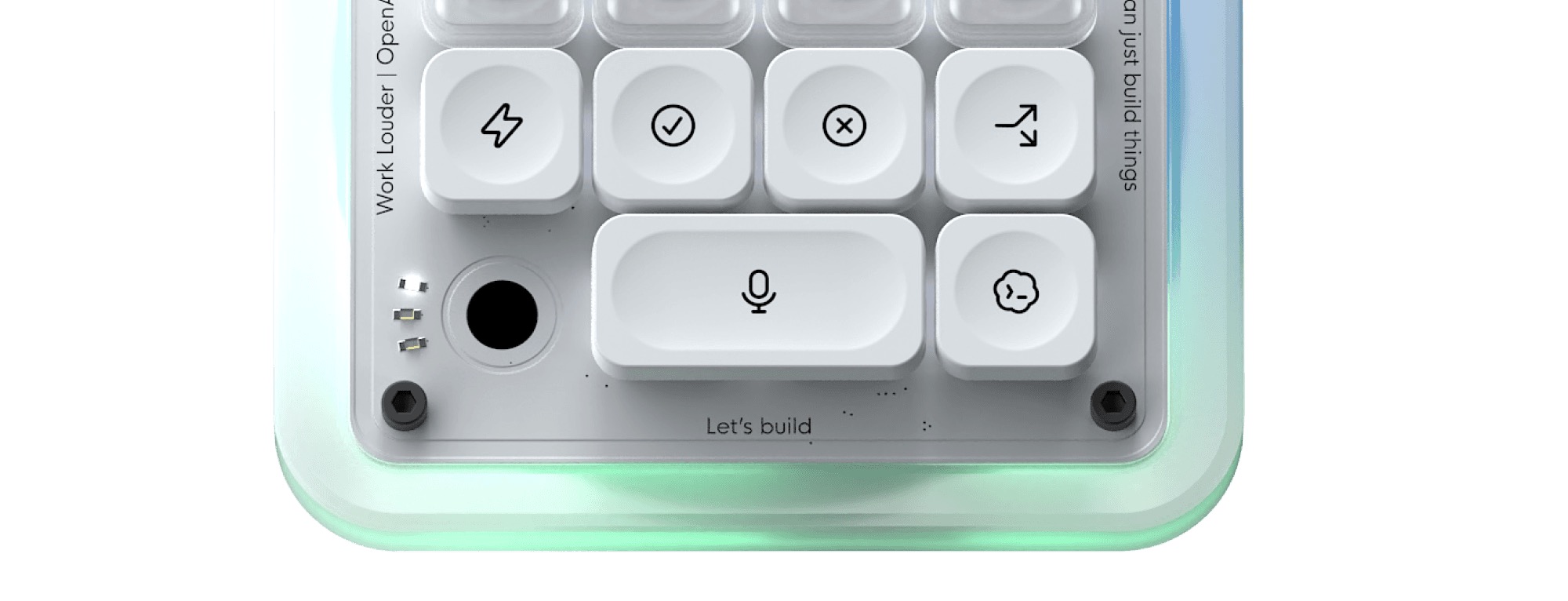
The command key icons are clear and legible — lightning bolt (quick run), checkmark (approve), X (cancel), arrow (switch), mic (voice), and a terminal prompt key. Below them is the "Let's build" engraving
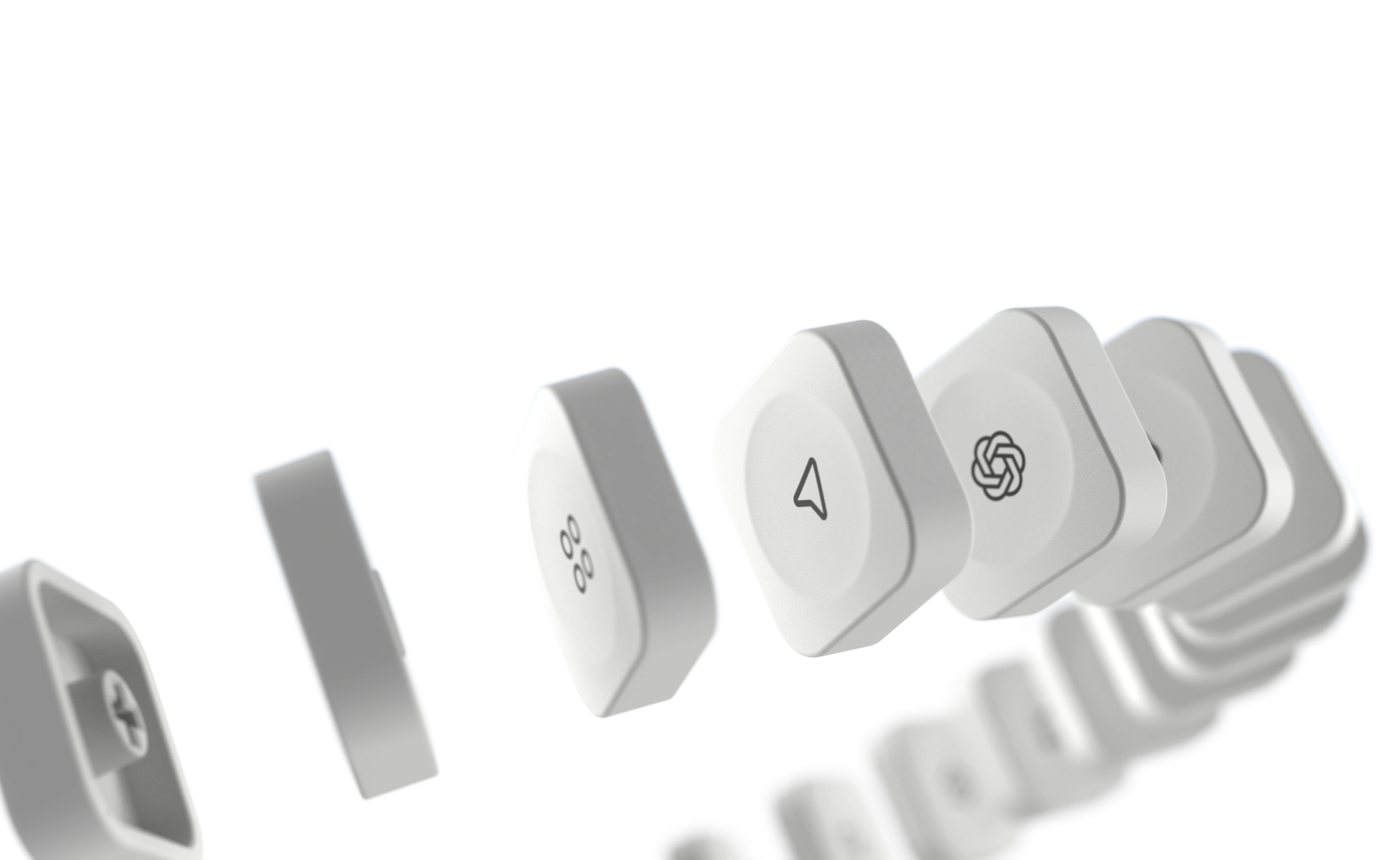
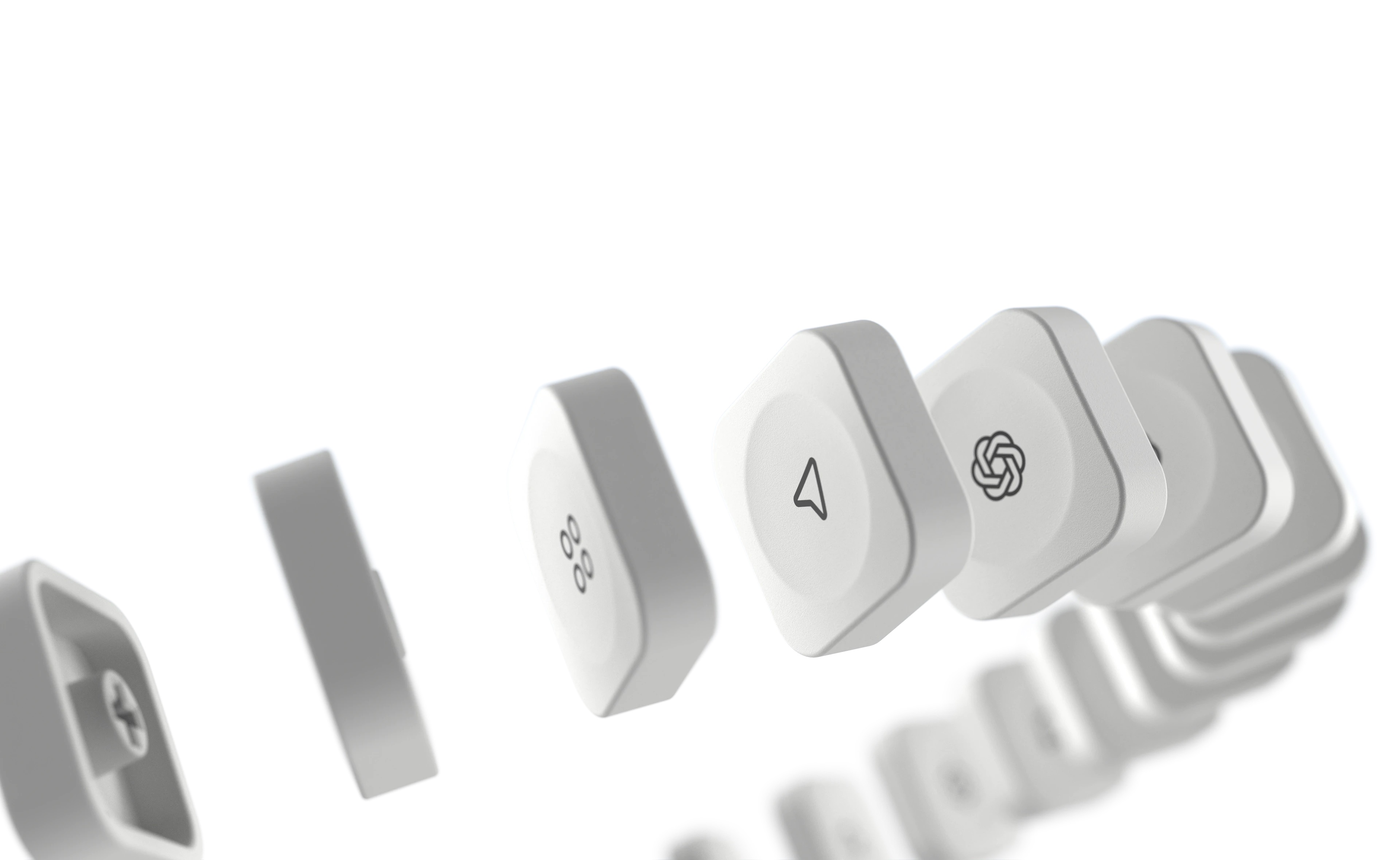
A styled shot with the keycaps disassembled. You can see the dedicated keycap engraved with the OpenAI bloom logo, alongside the send (run agent) arrow keycap
🔍 Why I'm Interested
The idea of piloting an AI agent "by hand"
Development is increasingly shifting toward a "hand it to the agent and review the result" workflow. But clicking through approve, cancel, and re-run on screen every single time gets tedious fast. The Codex Micro pulls those repetitive actions out into physical keys — a checkmark for approve, an X for cancel, a lightning bolt for a quick run. If you run multiple agents at once, these "fingertip shortcuts" could feel quite intuitive.
An Agent key that shows agent status through light
The top keys aren't simple buttons — they're Agent keys that display status via RGB. The concept is to signal which agent is working, which has finished, and which is stuck, all through color, so progress registers in your peripheral vision without needing to keep staring at the screen. It's a fun physical take on the concept of managing multiple coding agents like a "fleet."
The joystick and the "reasoning dial"
Reportedly, the joystick runs frequently-used workflows, while the dial on the upper left lets you turn a knob to control how deeply the agent "thinks" (how much time and compute it spends on reasoning). The idea of dialing reasoning intensity with a physical knob feels fresh — like bringing the muscle memory of setting exposure with a camera dial into AI work. (The exact behavior needs confirming through hands-on use or official documentation.)
The distinctive feel and engravings of an OpenAI collaboration
Built on Work Louder's Creator Micro 2, it pairs a transparent case, RGB lighting, and an aluminum base engraved with the OpenAI bloom logo. Engravings like "You can just build things" and "Let's build" are also included, giving it a clear collector's-item quality beyond its function.
🤔 What Gives Me Pause
The weight of $230 and being a limited edition
The biggest hurdle is price and scarcity. Reports put it at around $230 in limited production, and OpenAI itself has framed it with a nuance of "a collaboration item, not for mass sale." That's roughly $230 for a single macropad, so it's worth keeping in mind this is a piece weighted more toward collectible and symbolic value than practical utility.
Whether it actually boosts productivity is still unverified
Moving approve/cancel actions to physical keys sounds convenient, but you won't really know how much faster it is than keyboard shortcuts or screen clicks until you've used it. There's a real risk it ends up as "a second device that just sits pretty on the desk." The fact that the workflow is tied to the Codex/ChatGPT ecosystem could also limit its usefulness for anyone using other tools (e.g., other agents).
Ecosystem lock-in and ongoing support
Since it's controlled and customized through the ChatGPT desktop app, its functionality is at the mercy of OpenAI's app policies and API changes. Given its nature as limited-edition collaboration hardware, it's also uncertain whether firmware and software support will continue long-term. This feels closer to something you pay for "the fun of this exact moment."
Purchasing and shipping in Korea
As a US-origin limited collaboration, official domestic distribution is unlikely, and once you factor in overseas ordering, shipping, and customs, the actual cost climbs higher. Supply is also limited, so missing the window could mean having to buy at resale prices.
📋 Product Features (Subjective Rating)
- Design: ⭐⭐⭐⭐⭐ (collaboration craftsmanship, engravings, RGB)
- Buzz factor: ⭐⭐⭐⭐⭐ (OpenAI's first major hardware-level buzz)
- Practicality: ⭐⭐⭐☆☆ (a good concept, but unverified)
- Value for money: ⭐⭐☆☆☆ ($230 limited edition, centered on collectible value)
🛒 Before You Buy
✅ Recommended for
- Developers running multiple AI coding agents like Codex every day
- Early adopters who want to experiment with physical interfaces for AI workflows
- Collectors of OpenAI collaborations and tech merchandise
❌ Not recommended for
- Those who prioritize price relative to practical productivity gains
- Those who mainly use agents/tools other than OpenAI's
- Those unwilling to deal with the variables of ordering and shipping a limited edition from abroad
🎯 Final Verdict
The Codex Micro is one fun answer to the question, "In an age when AI writes code, what would a physical interface for piloting that AI look like?" The idea of watching agent status through a glowing Agent key, approving and canceling with physical keys, and dialing reasoning intensity with a knob is undeniably fresh.
But looking at it soberly, the $230 limited-edition price tag and the "not for mass sale" positioning say a lot about what this product actually is. It feels less like an essential productivity tool for right now, and more like conceptual hardware that symbolically represents the direction of AI-era development environments.
So personally, I'm less focused on "should I pull the trigger" and more interested in watching "how far this experiment goes." As a developer who runs agents every day and genuinely enjoys this kind of attempt, it definitely catches my eye — but weighing practicality, price, and ecosystem lock-in, I think it's still right to keep this one on the wishlist for now.
Source: OpenAI × Work Louder official page · Work Louder Codex Micro
Related posts
Q8botOne - A $599 Desk Robot Dog You Assemble Like LEGO Technic

Garmin Enduro 4 · Approach S72 - New Watches That Last Up to 320 Hours on a Single Charge
Edifier Hecate G2000 Bar - A Gaming Soundbar That Handles Voice Chat Without a Headset