Teenage Engineering EP-133 K.O. II — A Palm-Sized 64MB Sampler
Every time I see a Teenage Engineering product, my first thought is "why did they make this so beautiful?" The EP-133 stands out even among their lineup as a sampler with real practical use — it looks like something you could actually work with, not just an object to leave sitting on your desk.
📊 Quick Info
| Item | Details |
|---|---|
| Brand | Teenage Engineering (Sweden) |
| Price | $390 |
| Material/Specs | 64MB sampler composer, built-in mic and speaker, battery-powered, MIDI/SYNC ports |
| Key Features | On-the-spot sampling and sequencing, LCD display, doubles as a USB audio interface |
| One-line Review | ⭐⭐⭐⭐☆ An impressively self-contained workflow that fits in the palm of your hand |
✨ 3-Line Summary
- 👍 Best Feature: The built-in mic and speaker alone let you sample and play back anywhere
- 👎 Downside: A steep entry price around $390, plus a learning curve from the button-based UI
- 🎯 Best For: Anyone who wants to spontaneously make music while traveling or outdoors
📸 Product Gallery
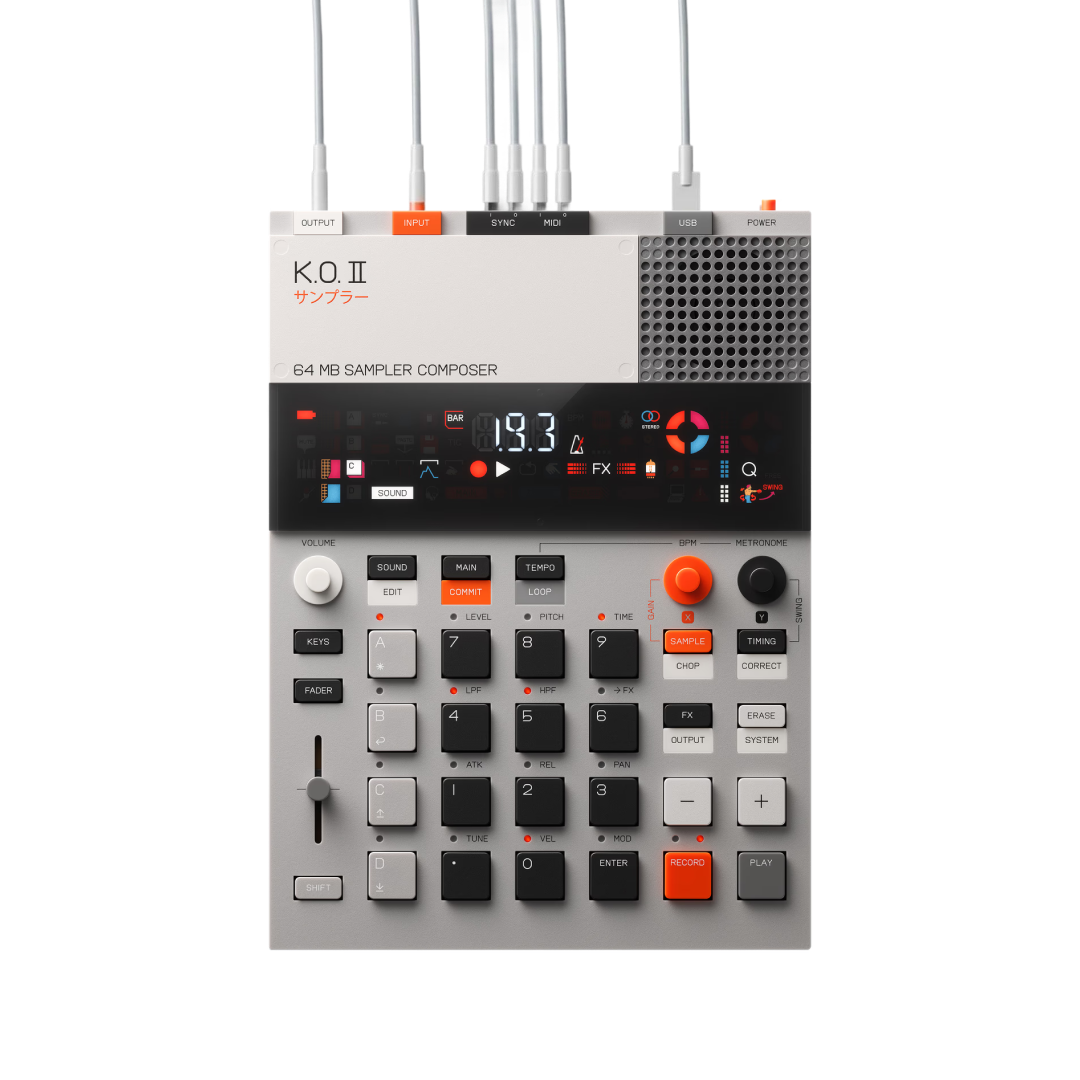
The cassette-inspired gray body, with the K.O. II logo and speaker grille
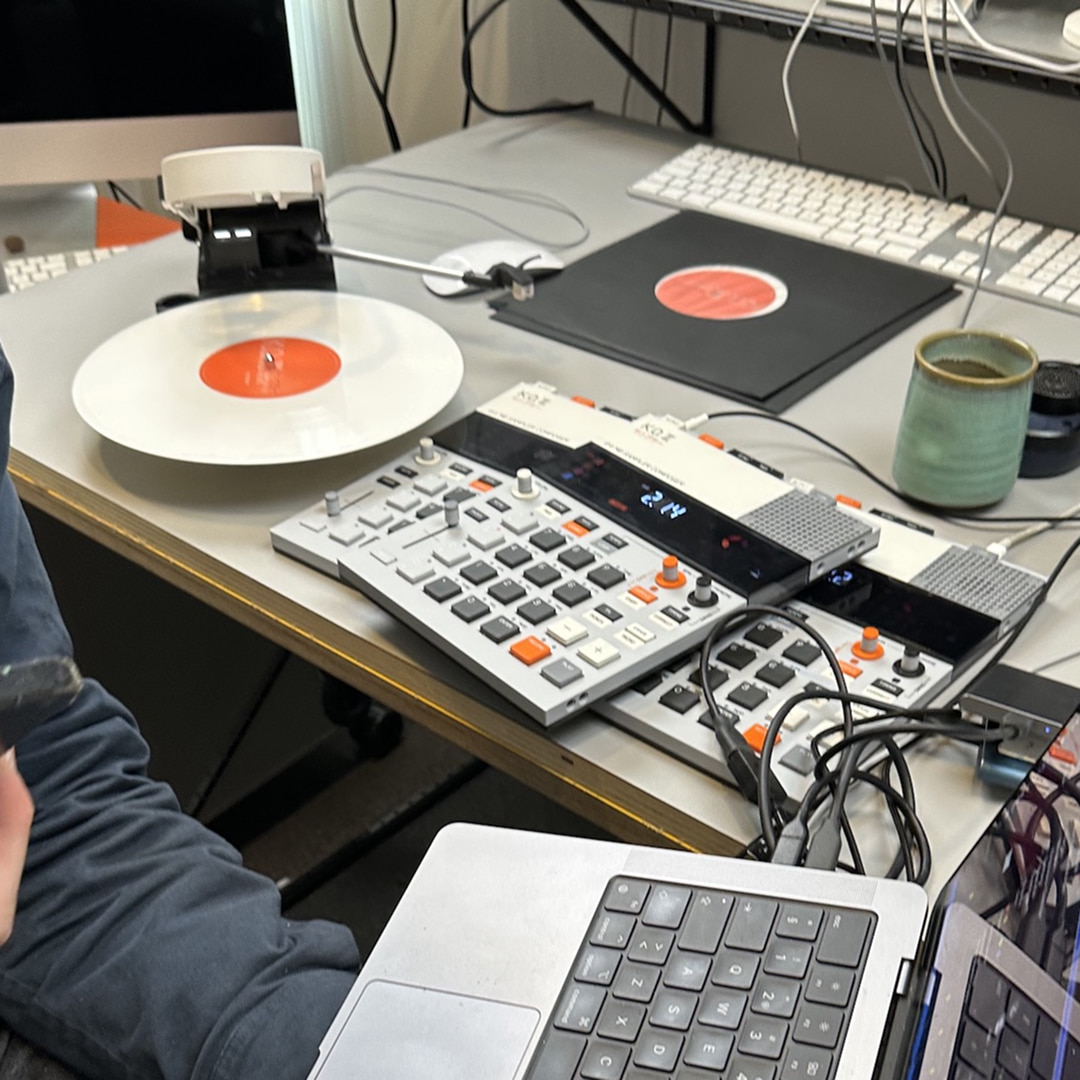
A desk setup sampling directly from a record next to the turntable
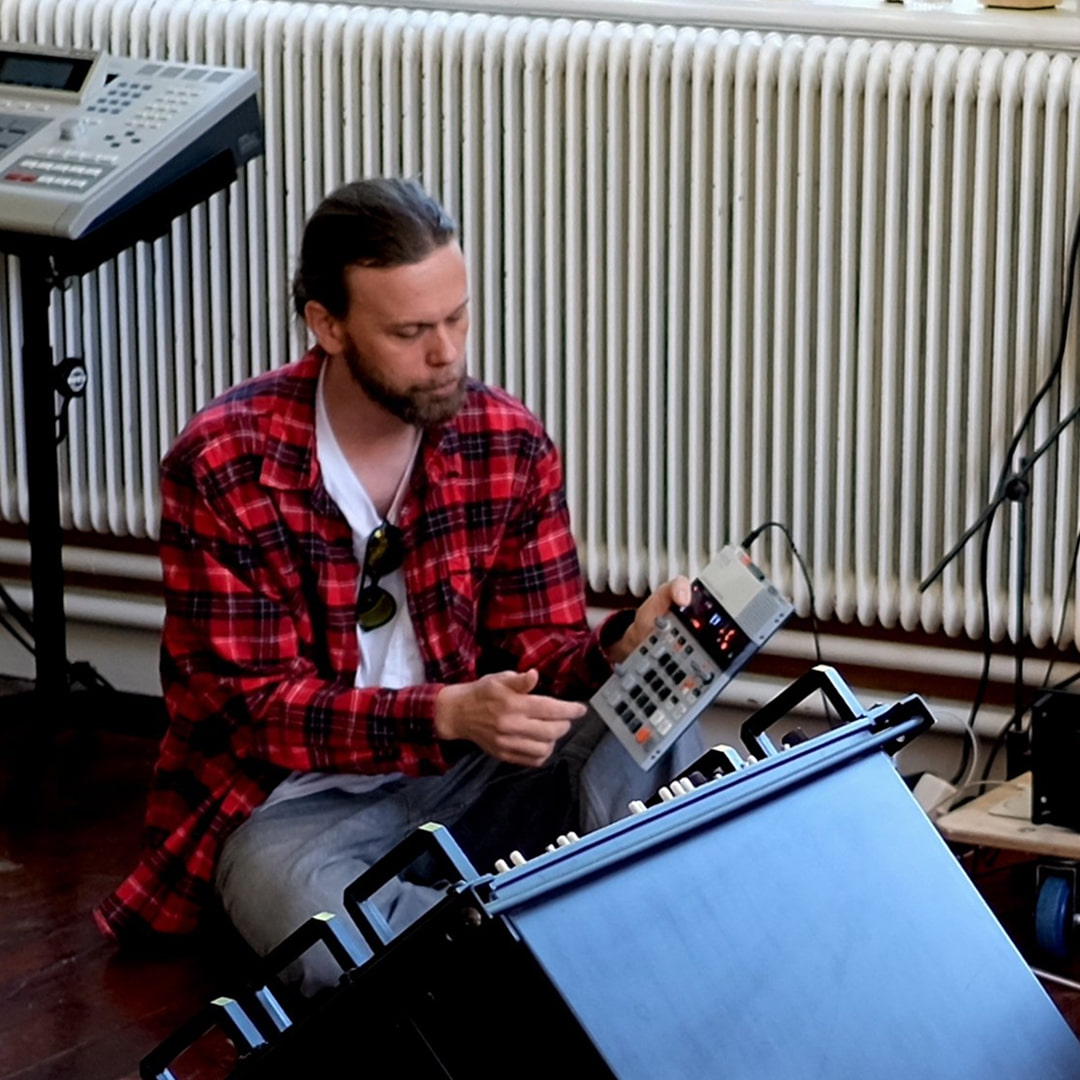
Holding the device in one hand and operating the pads on the spot
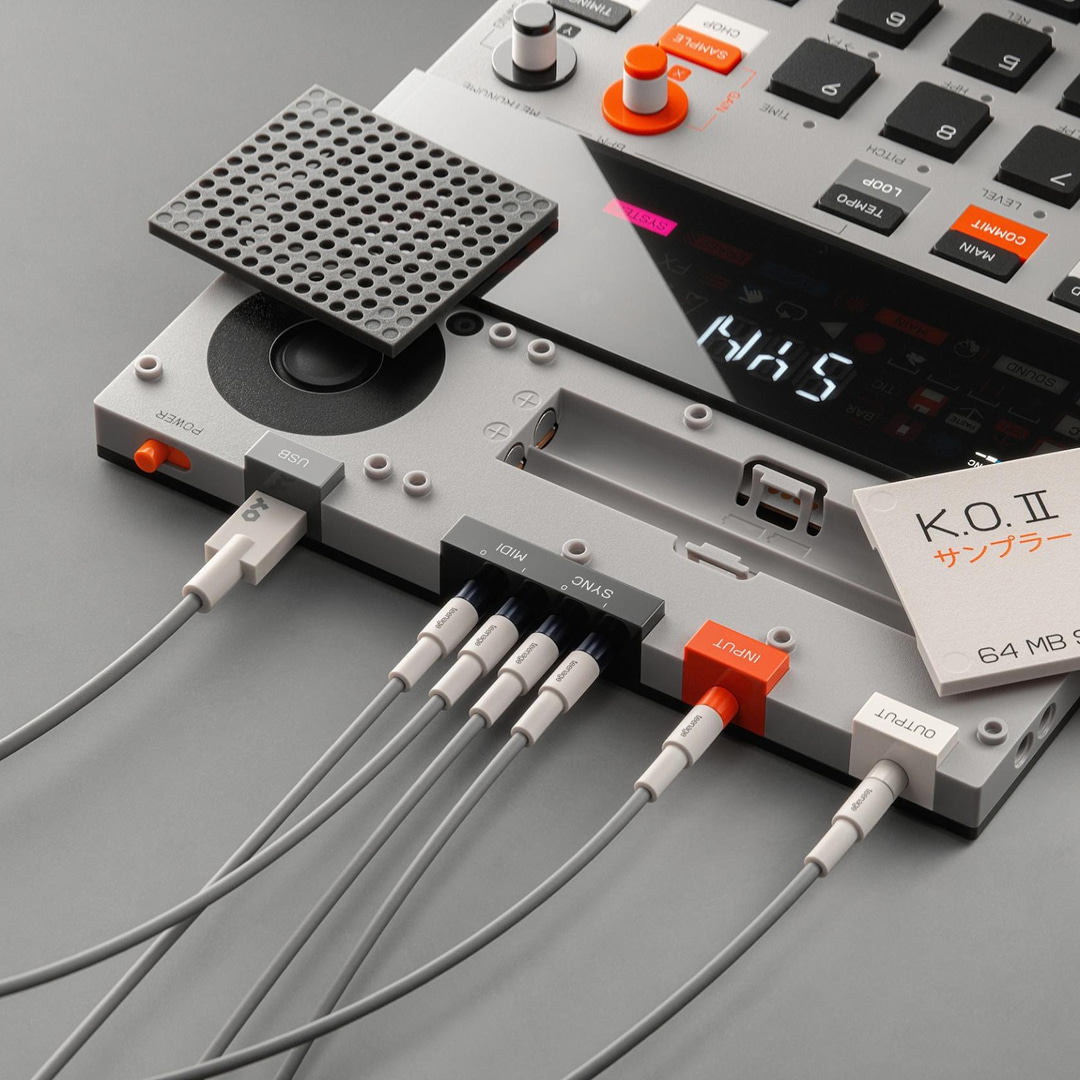
The rear port section, equipped with USB, MIDI, SYNC, and INPUT/OUTPUT
🔍 Why I'm Interested
A workflow that's complete in the palm of your hand
The core idea is that you can sample ambient sound through the built-in mic, or a record via USB, and go straight into sequencing on the spot. Being able to capture an idea the instant it happens — no laptop or audio interface required — really stood out from a practical standpoint.
UI charm reminiscent of a cassette player
The number pad, the red REC button, the small LCD — it's a modern reinterpretation of the old cassette/Walkman feel. Making a functional device that you actually want to carry around is very on-brand for Teenage Engineering.
Battery-powered and compact
It runs on batteries with no power cable needed, and it's small enough to fit in one hand, so calling it a "portable studio" doesn't feel like an exaggeration. It's a size you could toss in a travel bag without a second thought.
A middle ground between pro gear and casual users
Professional samplers tend to have a high barrier to entry, but the EP-133 seems approachable even at a hobbyist level, since you can get results with just a few button presses. That said, it still has depth — sequencer, effects, and more — so it looks like a tool you could keep using for a long time.
🤔 Points to Consider
The entry price around $390
It's a steep price for a casual start. If you're not seriously into music as a hobby, it might be hard to justify the expense.
Learning curve of the button-based UI
Navigating menus via the number pad means you'll likely need to check the manual at first. It could feel unfamiliar if you're used to intuitive touch interfaces.
Limited storage capacity
With a 64MB sampler spec, it's better suited to short loops and sample-focused work rather than large-scale projects. It may have limits for serious multi-track production.
📋 Product Features (Subjective Rating)
- Design: ⭐⭐⭐⭐⭐
- Portability: ⭐⭐⭐⭐☆
- Practicality: ⭐⭐⭐⭐☆
- Value for Money: ⭐⭐⭐☆☆
🛒 Before You Buy
✅ Recommended For
- Anyone who wants to capture spontaneous music ideas on the fly
- Fans of cassette/retro-inspired hardware design
- Anyone looking for portable sampling and beat-making gear
❌ Not Recommended For
- Budget-conscious beginners just starting out with music gear
- Anyone whose main goal is large-scale, multi-track production
🎯 Final Verdict
The EP-133 K.O. II is a great showcase of Teenage Engineering's signature positioning — "looks like a toy, works like a serious tool." Being able to go from sampling to playback on the spot with just the built-in mic and speaker gives it a solid reason to exist as a piece of portable audio gear.
The price isn't light and there's a UI learning curve, but if you think of it as buying the experience of spontaneously shaping music in your hands, it starts to make sense. It looks capable of pulling double duty — as a desk object and as a portable studio wherever you travel.
Source: Apollo Labs product page
Related posts
Edifier Hecate G2000 Bar - A Gaming Soundbar That Handles Voice Chat Without a Headset
Ohsnap Snap Grip - A 3mm MagSafe Grip and Stand That Sits Flat on Your Phone
Ohsnap Wallet 2 - A Modular Metal Wallet Just 5mm Thick, With Cards That Fan Out